How to Choose a Dental Sintering Furnace for Your Lab
A dental sintering furnace is one of the biggest equipment decisions a zirconia lab makes. It decides how many units you can finish per day, how consistent your shades and translucency are, and how often a remake comes back because of a crack or a chalky crown. This guide walks through what really matters when you choose a furnace for your lab: chamber size, temperature and heating elements, programs, the controller, accessories, maintenance and local support in Saudi Arabia, with a buying checklist at the end.
Start with your workload and chamber size
Before comparing models, look at your own numbers. How many zirconia units do you sinter on an average day, and on your busiest day? How many long-span bridges or full-arch cases do you make per month? A furnace that is too small forces you to run extra cycles or to overload the tray, which is a common cause of distortion and uneven results. A furnace that is far too large for a small lab means running half-empty cycles and paying for capacity you never use.
When you evaluate chamber size, think in terms of how many saggars or trays fit inside and how they stack, not only the chamber volume on the brochure. Also check the longest bridge you produce: it must lie fully supported inside the saggar without touching the walls. Many labs choose a furnace that covers their current daily load with some room to grow, and plan overnight cycles for large cases.
Maximum temperature and heating elements
Dental zirconia typically sinters around 1,450–1,550 °C. For example, UPCERA ST White and ST Color sinter at 1,530 °C, while UPCERA DUO, Explore and Aevra sinter at 1,480 °C. Your furnace must reach the highest temperature of every material you use, with a safety margin, and hold it accurately for the full hold time. A furnace that struggles near its upper limit will age faster and may give inconsistent results.
High-temperature dental furnaces commonly use molybdenum disilicide (MoSi2) heating elements. They are designed for these temperatures, but they need correct care: a clean chamber, no contamination from metals or coloring liquid residue, and any regeneration firing the manufacturer recommends. When you compare furnaces, ask how the elements are protected from contamination, how long they typically last in normal dental use, and how easy they are to replace.
Programs and speed sintering
Every zirconia has its own sintering curve: heating rate, peak temperature, hold time and cooling. A good furnace lets you set each of these stages precisely, including controlled cooling, because cooling too fast is a classic cause of cracks in thick pontics. If you work with several brands or several materials from one brand, you need enough flexibility to run each one with its own program.
Speed sintering can shorten turnaround time for single crowns and small bridges, but it is only safe when both the material and the furnace are approved for it. Check that the zirconia you use has a speed program from its manufacturer before relying on this feature, and keep conventional programs for long-span bridges and bulky restorations. For the details of each stage, see our zirconia sintering guide.
Controller and saved programs
The controller is what your team uses every day, so it deserves as much attention as the heating chamber. A clear controller reduces human error, especially in labs where several technicians share one furnace or work in shifts. Look for:
- Enough program memory to save a program for every material you use, with clear names such as “UPCERA DUO 1480”.
- Multi-segment programs so you can set heating, holding and cooling separately.
- A readable display and simple menus that a new technician can learn quickly.
- Program locking or user levels, if available, so saved programs are not changed by mistake.
- Clear error messages and a record of completed cycles, which help when you investigate a failed batch.
Accessories: saggars, trays and sintering beads
Accessories are not an afterthought. Restorations should sit on sintering beads or a suitable tray so they do not touch each other or the walls, and long bridges need support along their full length to prevent sagging. A saggar with a lid protects restorations from contamination and helps distribute heat evenly. Always use trays and saggars made for your furnace model: the wrong size can block airflow, touch the heating elements or prevent the door from closing correctly.
For Nabertherm furnaces we supply the Nabertherm plate set charge saggar. It has ventilation openings and a lid, measures 110 × 75 × 30 mm outside and 95 × 60 × 20 mm inside, and fits the LHT 01/17, LHTCT 01/16, LHTCT 03/16 and LHT 01/17 D furnaces. Before buying any furnace, confirm that original accessories and consumables are easy to reorder locally.
Calibration and maintenance
Even a high-quality furnace drifts over time. If the real chamber temperature differs from the displayed one, zirconia can come out under-sintered (chalky, weak) or over-sintered (shade and fit problems), even with the correct program. Ask how calibration is done on each furnace you consider, how often the manufacturer recommends it, and whether you can check it in the lab or need a technician.
Daily habits matter too: keep the chamber clean, remove milling dust before sintering, dry colored restorations completely, and never open the furnace before the end of the cooling phase. Follow the manufacturer’s maintenance schedule for heating elements, insulation and door seals, and keep a simple log of cycles and any problems you notice.
Local service and spare parts in Saudi Arabia
A furnace that is down for weeks while you wait for a part from abroad costs far more than any difference in purchase terms. Before buying, ask the supplier who installs the furnace and trains your team, which spare parts (such as heating elements, thermocouples and accessories) can be supplied in Saudi Arabia, and how support works if the furnace shows an error. Buying from an official partner of the manufacturer gives you a direct channel for original parts, accessories and technical questions.
Buying checklist for a dental sintering furnace
| What to check | Questions to ask |
|---|---|
| Capacity | How many units and saggars fit per cycle? Does my longest bridge fit fully supported? |
| Maximum temperature | Does it reach the highest sintering temperature of all my materials with a margin? |
| Heating elements | What type are they, how are they protected, and how easy are they to replace? |
| Programs | Can I set heating, hold and controlled cooling separately? Is speed sintering approved for my materials? |
| Controller | How many programs can I save? Is it easy for every technician to use? |
| Accessories | Are original saggars, trays and beads available locally? |
| Calibration | How is calibration checked and how often is it recommended? |
| Service and parts | Who installs, trains and supports the furnace in Saudi Arabia? Which spare parts are available locally? |
Nabertherm sintering furnaces from Aqras Medical
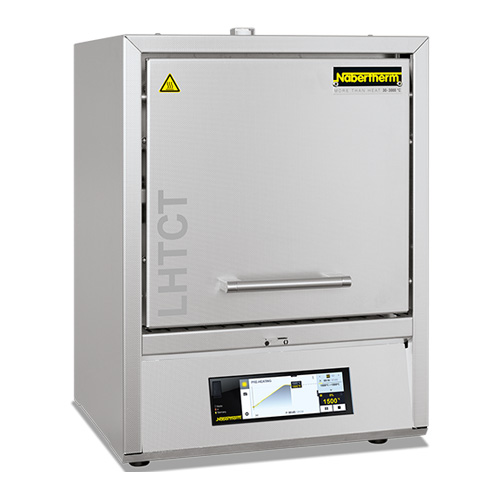
Nabertherm is a German manufacturer of industrial and laboratory furnaces. Aqras Medical supplies the Nabertherm LHTCT 01/16 dental sintering furnace together with original accessories such as the matching charge saggar. Contact us for the current technical details of the furnace and to discuss whether it suits your lab’s workload and materials.
As the official Nabertherm partner in Saudi Arabia, we can help you plan your sintering setup. Add the furnace and accessories to your quote request or message us on WhatsApp, and we will reply with availability and a quotation.
Frequently asked questions
What temperature does a dental sintering furnace need to reach?
Dental zirconia typically sinters around 1,450–1,550 °C, so the furnace must reliably reach and hold the highest temperature of the materials you use. For example, UPCERA ST White and ST Color sinter at 1,530 °C, and DUO, Explore and Aevra at 1,480 °C.
How do I choose the right furnace size for my lab?
Count how many zirconia units you sinter on a normal day and on your busiest day, and check that your longest bridge fits fully supported in a saggar. Choose a furnace that covers your daily load with some room to grow.
Do I need a furnace with speed sintering?
Speed sintering is useful for single crowns and small bridges, but only when both the zirconia and the furnace are approved for it. Long-span bridges and bulky restorations are safer with a conventional program.
How often should a sintering furnace be calibrated?
Follow the interval in the furnace manufacturer’s instructions. Also check the calibration whenever results change without a clear reason, for example chalky crowns or shade shifts with a program that used to work.
Which accessories do I need with a sintering furnace?
At minimum, saggars with lids, trays and sintering beads made for your furnace model. For Nabertherm furnaces, the plate set charge saggar fits the LHT 01/17, LHTCT 01/16, LHTCT 03/16 and LHT 01/17 D models.